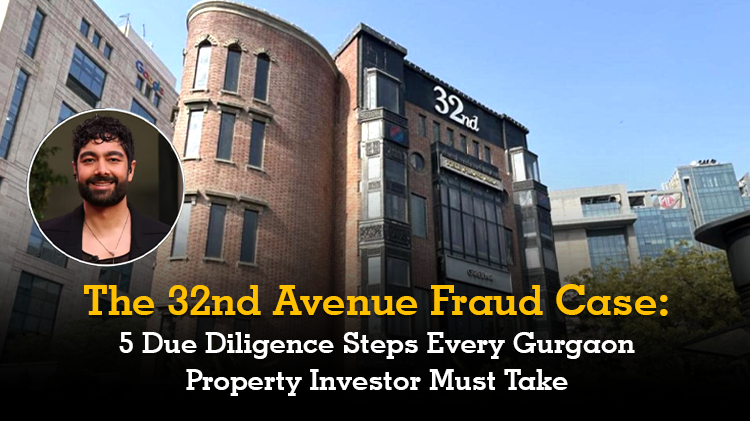
When the news about the 32nd Avenue case began circulating, most people reacted the same way.
“Not possible. That’s a premium address.”
And honestly, that reaction felt natural.
After all, if you’ve ever walked through 32nd Avenue, you know the energy. The cafés are full. The lighting is sharp. The vibe feels stable. Everything looks curated. Everything feels secure.
However, real estate does not run on lighting.
It runs on legal structure.
And that’s exactly why the recent discussions around Dhruv sharma 32nd avenue and the wider 32nd avenue Gurgaon controversy matter so much in 2026.
Because while branding builds confidence, paperwork builds protection.
And those two things are not the same.
Why This Case Sparked Real Concern in Gurgaon
First of all, this is not just about one commercial space.
Instead, it reflects how Gurgaon’s real estate ecosystem works.
Every year, we see joint ventures.
We see land pooling models.
We see investor-driven commercial launches.
And, increasingly, we see assured return structures.
During strong market phases, excitement grows fast. As a result, scrutiny slows down. Brokers create urgency. Developers promote scarcity. Investors move quickly.
However, when a high-profile case appears, everything shifts.
Suddenly, people ask harder questions.
And frankly, that shift is healthy.
In fact, as per recent housing demand trends in NCR, investor participation remains strong in emerging corridors. At the same time, funding models have become more layered.
Therefore, discipline is no longer optional.
It is essential.

A Small Story That Explains Everything
A few years ago, I met a buyer who invested in a commercial unit simply because the developer’s office looked impressive.
Italian flooring. Premium reception. Glass façade.
Naturally, it felt trustworthy.
However, he didn’t verify land ownership.
Six months later, legal disputes delayed the project.
The office still looked premium.
But the investment did not feel premium anymore.
And that difference stays with you.
Because presentation fades.
Documentation stays.
Due Diligence Steps Every Gurgaon Property Investor Must Follow
These are not theories.
They are protection layers.
1. Verify Land Title — Always Start Here
Before anything else, ask the simplest question:
Who owns the land?
Is it freehold or leasehold?
Is there any pending litigation?
Are there financial charges on the property?
Very often, investors assume strong branding equals clean paperwork.
However, that assumption creates silent risk.
Therefore, get an independent legal opinion.
Yes, it costs money.
But compared to capital exposure, it is minor.
One common line buyers hear is:
“Approvals are in process.”
However, in process does not mean approved.
And that gap matters more than most people realize.
2. Understand the Financial Structure
Next, understand how the project is funded.
Many Gurgaon commercial projects operate through:
Special Purpose Vehicles (SPVs)
Joint development agreements
Revenue-sharing partnerships
On paper, this looks structured. However, complexity increases financial exposure.
So instead of assuming safety, ask directly:
Who carries liability?
Is there external borrowing?
Is construction loan-funded?
Some developers mention institutional backing or real estate investment trust companies. While that adds oversight, it does not eliminate risk.
Therefore, verify structure before trusting marketing.
3. Check Regulatory Approvals Carefully
Construction does not equal compliance.
If you’ve ever passed a busy site and thought, “Work is happening, so everything must be approved,” pause there.
Instead, verify:
Change of Land Use (CLU)
Building plan approval
Fire NOC
Environmental clearance
Occupancy certificate
Additionally, request copies.
Not screenshots. Not verbal confirmation.
In earlier cycles, partial approvals were common. Later, those gray areas became legal complications.
Therefore, clarity now prevents stress later.
4. Examine Assured Return Models Slowly
Commercial projects often advertise:
9%–12% assured return
Pre-leased tenants
Buyback guarantees
At first glance, it looks attractive.
However, pause here.
Ask:
Is the return legally binding?
Is it escrow-backed?
Is it funded by tenant rent or developer reserve?
What happens if the tenant exits?
In previous cycles, some returns were funded by new investor inflows.
That model works only when sales momentum continues.
Once it slows, payments strain.
Therefore, read the agreement line by line.
5. Research the Promoter — Beyond Social Media
Finally, study the promoter track record.
When discussions around dhruv sharma 32nd avenue increased, many investors began checking past delivery history.
However, that research should always happen first.
Look at:
Past projects delivered
Litigation involvement
Debt exposure
Market reputation
If possible, speak to previous buyers.
Because branding speaks loudly.
But delivery history speaks longer.
A Real Weekend Comparison
Recently, I visited three commercial projects in one afternoon.
All three promised strong returns.
All three had polished brochures.
However, only one immediately provided full documentation when asked.
No delay.
No hesitation.
That difference felt small.
But it wasn’t.
Confidence backed by paperwork feels calm.
Confidence backed by sales pressure feels urgent.
And investors can sense that difference quickly.
What This Means for First-Time Commercial Investors
Interestingly, many first-time home buyers shift toward commercial property expecting higher rental yield.
Sometimes that works.
However, commercial investing is purely numbers-driven.
Vacancy risk matters.
Tenant stability matters.
Lease lock-in matters.
Unlike residential property, there is no emotional fallback.
Therefore, if you are new:
Start small.
Avoid heavy leverage.
Diversify exposure.
You can also read our detailed comparison of home loan options before finalizing financing.
Because debt increases both gain and risk.
The Bigger Lesson
The 32nd Avenue case is not a warning sign to exit Gurgaon.
Instead, it is a reminder to slow down.
Gurgaon remains one of India’s fastest-growing real estate markets. Infrastructure expansion continues. Corporate demand remains strong. Investor appetite is active.
However, rapid growth invites aggressive funding models.
Therefore, investors must evolve.
Ask questions.
Read documents.
Take legal review seriously.
Because glossy façades fade.
Documentation does not.
And in 2026, smart property investors are not the fastest buyers.
They are the most prepared ones.
FAQs
- Does the 32nd avenue case mean Gurgaon real estate is unsafe?
No. It highlights the need for due diligence, especially in commercial segments.
- Should investors avoid commercial real estate now?
Not necessarily. However, deeper verification is essential before committing capital.
- Are projects backed by real estate investment trust companies safer?
They often follow structured governance, but no investment is risk-free. Documentation still matters.
- How can small property investors reduce risk?
Diversify exposure, verify legal clearances independently, and avoid over-leveraging.